1. Beyond Bitumen: Why Interlock Pavers Are Taking Over
If you walk through the new residential zones of Bashundhara or the industrial parks of Gazipur, you will notice a change. The cracked concrete roads and melted bitumen surfaces are disappearing. In their place, Interlock Pavers (Unipavers) are becoming the standard.
Why is this shift happening? Because traditional roads fail in Bangladesh’s climate. Bitumen roads dissolve under heavy monsoon rains and waterlogging. Cast-in-situ concrete (RCC) is rigid; therefore, it cracks when the soil underneath shifts.
Interlock Pavers, however, behave differently. They are segmented. When the ground moves, they move slightly without cracking. They are high-strength, aesthetically pleasing, and, most importantly, reusable. If you need to fix a pipe underneath, you simply unzip the pavement, fix the pipe, and lock the pavers back in. No jackhammers are required.
This guide covers everything you need to know about purchasing, installing, and maintaining unipavers in Bangladesh.
2. What is an Interlock Paver?
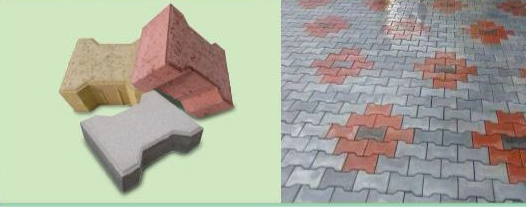
An interlock paver is a pre-cast concrete block designed to fit with its neighbors like a puzzle piece. Unlike tiles, they are not glued down with cement mortar. Instead, they are laid on a bed of sand.
The magic lies in the “Interlocking Effect.” When a heavy vehicle drives over one block, the load is not borne by that single block alone. Because the blocks are locked together by friction and sand joints, the load spreads across the surrounding blocks. This allows a driveway to handle heavy trucks without sinking.
3. Types of Pavers in the Bangladeshi Market
Not all pavers are the same. While people often call all of them “Unipavers,” that is actually just one specific shape.
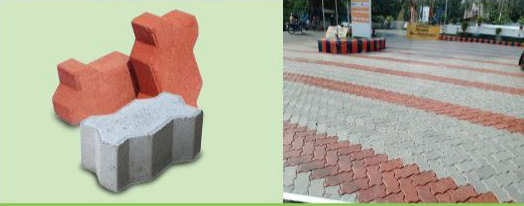
3.1. Uni-Paver (Zigzag)
This is the most common shape on public roads.
- Shape: Zigzag edges.
- Why it works: The zigzag pattern provides the highest degree of interlock friction. It resists movement better than any other shape.
- Best For: Main roads, petrol pumps, and factory driveways where heavy braking occurs.
3.2. I-Shape / Dumbbell
- Shape: Looks like the letter ‘I’.
- Why it works: excellent structural integrity and easy to lay in straight lines.
- Best For: Industrial yards and container terminals.
3.3. Rectangular / Brick Paver
- Shape: Standard brick shape (2:1 ratio).
- Why it works: It offers the most design flexibility. You can lay them in Herringbone, Basketweave, or Running Bond patterns.
- Best For: Residential driveways, walkways, and patios where aesthetics matter most.
3.4. Grass Pavers (Eco-Pavers)
These are hollow concrete grids.
- Function: Soil and grass are filled inside the voids.
- Why it works: It allows rainwater to soak directly into the ground, recharging the water table.
- Best For: “Green” parking lots and garden paths.
4. Technical Specifications: Choosing the Right Thickness
This is the most critical section for buyers. If you choose the wrong thickness, your pavement will crack. Strength is measured in PSI (Pounds per Square Inch) and thickness in Millimeters (mm).
Table 1: Thickness & Application Guide
| Paver Thickness | Typical Strength (PSI) | Traffic Category | Recommended Application |
| 40mm – 50mm | 3000 PSI | Pedestrian Only | Rooftops, garden walkways, cycling paths. |
| 60mm | 4000 – 5000 PSI | Light Vehicles | Private car parking, residential driveways, sidewalks. |
| 80mm | 5000 – 7000 PSI | Heavy Traffic | Main city roads, petrol pumps, bus terminals. |
| 100mm – 120mm | 8000+ PSI | Extreme Load | Sea ports, container yards, airports, factory loading docks. |
Pro Tip: For a standard home garage in Dhaka, 60mm is the standard. Do not let a contractor sell you expensive 80mm blocks unless you plan to park a loaded truck there.
5. Market Price Analysis (2026)
Paver prices in Bangladesh depend heavily on the color. Grey (cement color) is the cheapest because it uses no pigment. Red, yellow, and black require expensive oxide pigments, often imported from Germany or China.
Prices below are estimated for Dhaka/Chittagong metro areas.
Table 2: Unipaver Price List (BDT)
| Product Type | Color | Price Per Sq. Ft. (Supply Only) | Price Per Piece (Approx) |
| Uni-Block (60mm) | Grey | ৳ 55 – ৳ 65 | ৳ 14 – ৳ 16 |
| Uni-Block (60mm) | Red/Black | ৳ 70 – ৳ 85 | ৳ 18 – ৳ 22 |
| Uni-Block (80mm) | Grey | ৳ 75 – ৳ 85 | ৳ 19 – ৳ 22 |
| Uni-Block (80mm) | Red/Black | ৳ 90 – ৳ 110 | ৳ 23 – ৳ 28 |
| Rectangular (60mm) | Mix Color | ৳ 75 – ৳ 90 | ৳ 18 – ৳ 22 |
| Grass Paver | Grey | ৳ 80 – ৳ 100 | Varies by size |
Note: Installation cost (labor + sand) usually adds another ৳25 – ৳35 per sq. ft.
6. The Installation Process: It’s All About the Base
The biggest mistake homeowners make is focusing on the block quality while ignoring the ground underneath. If the base sinks, the pavers sink.
Here is the correct engineering method for a long-lasting driveway:
Step 1: Sub-grade Preparation
Remove the soft topsoil. Compact the natural earth using a heavy roller or plate compactor. The soil must be rock hard.
Step 2: Base Course (The Strength Layer)
Lay 4 to 6 inches of crushed stone chips or brick chips (khoa). Compact this layer thoroughly. This layer actually carries the weight of the cars.
Step 3: Bedding Sand (The Cushion)
Spread a layer of coarse sand (Sylhet sand is best), about 1 to 1.5 inches thick. Screed it smooth.
- Warning: Do not compact this sand yet. Do not walk on it.
Step 4: Laying the Pavers
Place the pavers on the loose sand bed. Keep the gaps tight (2-3mm). Cut the edge pieces to fit the border using a diamond blade saw.
Step 5: Compaction and Jointing
Run a vibrating plate compactor over the pavers. This forces them down into the sand bedding. Finally, sweep fine sand over the surface to fill the tiny gaps between pavers. This “locks” the system.
7. Comparative Analysis: Pavers vs. RCC vs. Asphalt
Why should you choose pavers over a simple concrete slab?
Table 3: Paving Material Comparison
| Feature | Interlock Pavers | RCC (Concrete Slab) | Asphalt (Bitumen) |
| Initial Cost | Medium | High | Medium |
| Maintenance | Low (Replace single blocks) | High (Patching is ugly) | High (Needs resurfacing) |
| Aesthetics | Excellent (Patterns/Colors) | Poor (Grey/Drab) | Plain Black |
| Permeability | High (Water drains gaps) | None (Creates runoff) | None |
| Service Life | 20+ Years | 15–20 Years | 5–10 Years |
| Underground Access | Easy (Unzip & Zip) | Difficult (Jackhammer) | Difficult (Cut & Patch) |
| Instant Use | Yes (Drive immediately) | No (Wait 21 days to cure) | Yes (after cooling) |
8. Maintenance and Troubleshooting
While pavers are durable, they require some care to look fresh.
- Weeds in Joints: In Bangladesh, grass loves to grow in the sand joints.
- Fix: Use polymeric sand (hardening sand) in the joints, or spray a weed killer annually. A strong pressure wash also helps.
- Sinking Spots: Sometimes a small area dips if the underground pipe leaks or the base wasn’t compacted.
- Fix: Lift the 10-20 blocks in that area, add more sand, compact it, and put the same blocks back. It will look brand new.
- Fading Color: The sun in Bangladesh is harsh. Red pavers will eventually turn pinkish-grey over 5-10 years.
- Fix: Apply a “wet-look” concrete sealer every 2 years to enhance the color and protect against oil stains.
9. Common Myths Debunked
Myth: “Pavers are just weak bricks.”
Fact: A good paver is made with a hydraulic press at 4000+ PSI. A clay brick breaks at 1500 PSI. Pavers are nearly three times stronger than standard bricks.
Myth: “Water goes through the block itself.”
Fact: The concrete block is solid. Water drains through the joints (the gaps) between the blocks, not through the block material.
Myth: “I can use local sand for the bedding.”
Fact: Using “Vitti sand” (fine filling sand) is a disaster. It washes away with rain. You must use coarse, sharp sand (Sylhet sand or Stone dust) that drains well and locks together.
10. Conclusion
Unipavers and Interlock pavers have revolutionized landscaping and road construction in Bangladesh. They offer a blend of beauty and brawn that asphalt and plain concrete cannot match. Whether you are building a heavy-duty container yard in Chittagong or a serene garden walkway in Dhanmondi, there is a paver thickness and shape designed for your need.
By choosing pavers, you are not just building a driveway; you are building a permeable, flexible, and repairable system that works with the Bangladeshi climate, not against it.
Next Step for You:
Choosing the right laying pattern (Herringbone vs. Basketweave) affects the strength of the pavement. Would you like me to generate a “Pattern Guide” that explains which laying pattern is strongest for vehicles versus which is best for walkways?