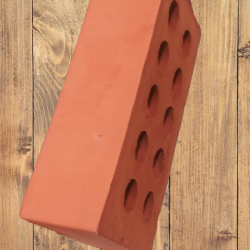
The brick you choose shapes the building you create.
When it comes to construction in Bangladesh, most builders still ask one big question: Should I use ceramic bricks or traditional clay bricks? Both have their uses, but one clearly wins in modern building standards.
What’s the difference between the two?
Traditional clay bricks are handmade or machine-pressed using local soil and fired in basic kilns. They vary in size, color, and strength.
Ceramic bricks, on the other hand, are made with refined clay, machine-molded, and fired in high-temperature kilns for uniform strength, color, and durability.
Key differences at a glance
| Feature | Ceramic Bricks | Traditional Clay Bricks |
|---|---|---|
| Manufacturing | Machine-pressed, precision-made | Hand-made or machine-pressed |
| Color | Uniform red | Irregular, often dull or faded |
| Size consistency | Exact (9.5×4.5×2.75 in) | Inconsistent |
| Strength | High compressive strength | Moderate to low |
| Water absorption | Low | High |
| Durability | 50–100+ years | 20–30 years |
| Price per piece | BDT 15–22 | BDT 8–12 |
Why builders prefer ceramic bricks now
- Precision saves plaster
Uniform sizing means less mortar and less finishing material. - Faster construction speed
No need to adjust for irregular sizes like with clay bricks. - Stronger and more weather-resistant
Ceramic bricks resist moisture, cracking, and erosion much better. - Long-term value
Ceramic bricks lower maintenance and repair costs over decades. - Cleaner and safer
Fired at higher temperatures, they’re less prone to fungal growth or chemical leaching.
But traditional clay bricks still have some uses
If you’re on a tight budget or doing temporary structures, clay bricks might be acceptable. They’re also easier to source in remote villages, where transporting ceramic bricks costs more.
Which one is right for you?
- For modern buildings, commercial sites, and long-term homes: Ceramic bricks.
- For boundary walls, sheds, or low-cost housing: Clay bricks may work—but expect shorter lifespans.
Real-world example
A residential project in Dhaka switched from clay to ceramic mid-construction.
Result? They reduced plaster cost by 12%, saved 7 days in labor, and got better thermal performance.
They also reported fewer cracks after the first monsoon.
Final takeaway: Choose with your future in mind
Ceramic bricks are engineered for today’s standards and tomorrow’s expectations. While traditional bricks built the past, ceramic bricks are building the future—with strength, beauty, and precision.